← Back to work
03 Founder ● Live in production

Rumio

How a small team took an Albanian service-booking platform from idea to 1,000+ active users in ten months — by deciding, early and loudly, what not to build.

B2B2C SaaS Marketplace GTM Growth Partnerships Mobile Flutter
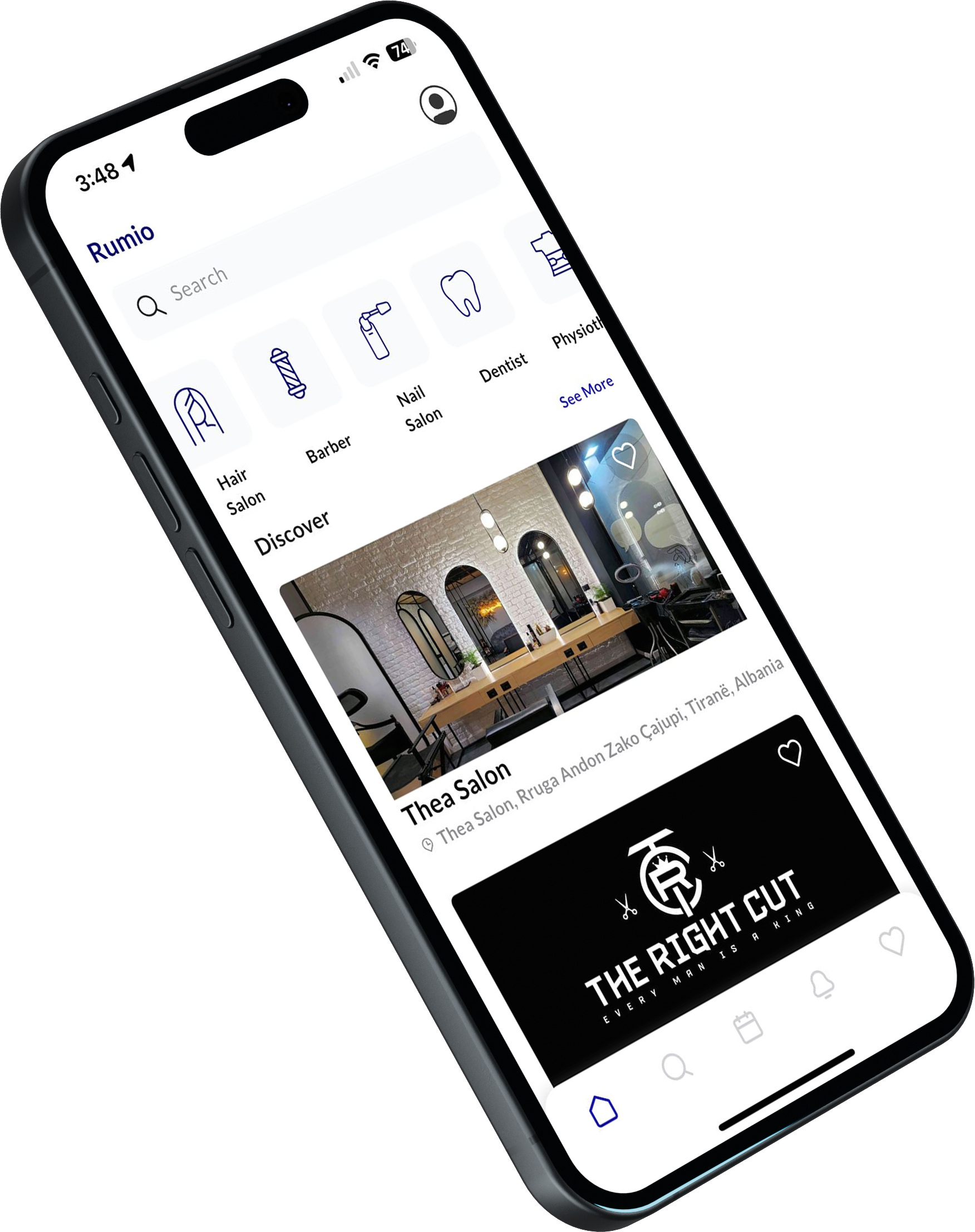
Rumio customer app
Industry B2B2C SaaS · Two-sided marketplace
Role Co-founder & CPO
Timeline January — October 2025
Team 2 founders · 1 sales · 1 marketing
Download App Store Google Play

Not a scheduling tool. A revenue leak the whole industry had learned to live with.

Albania has roughly 27,000 service businesses — barbers, hairdressers, nail studios, physiotherapists, dentists, private clinics. Almost all of them operated the same way: a customer DM'd on Instagram or WhatsApp, waited for a reply, confirmed a time verbally, and hoped the business wrote it down. The "system" was whoever answered the phone that day. After hours, bookings stopped.

The pain showed up in three places. Businesses lost revenue to no-shows and double-bookings they couldn't reconstruct. Owners spent hours a week retyping names into notebooks and chasing cancellations. Customers — often booking a €15 haircut or a €25 manicure — were dropping out because three unanswered messages in a row made them go next door. Meanwhile, the global players (Booksy, Fresha) were technically available but built for Western markets: English-first UX, price points that didn't translate to small independent salons in the market, and the assumption that customers would happily install yet another app.

For business owners

Someone can book me at 11pm without texting me. I see every appointment in one place. I stop losing clients to "sorry, I missed your message."

For customers

Tap a link, pick a time, be done. No app to install, no account to create.

That framing — not "let's build a scheduling tool" — is what drove every decision that followed.


Four scoping decisions did most of the work. The rest was execution.

01

Browser or app — customer's choice

Booksy and Fresha are marketplace platforms — customers book through them, not through the business. That creates dependency on their discovery algorithm and puts the client relationship inside someone else's product. We gave each business its own booking link, working directly from Instagram, WhatsApp, or Google Maps without any install required. The booking experience belonged to the salon, not to a platform.

02

B2B side first. Consumer marketplace later.

The easiest mistake in a two-sided marketplace is launching both sides at once and having neither. I staged it explicitly: solve the business side so well that suppliers become the channel for their own customers. Consumer discovery — "find a salon near me" — was deliberately not shipped. It would only be useful once supply density per neighbourhood was real.

03

Six-month freemium, eyes open

We gave businesses six months free. I was explicit with the team: we traded a clean willingness-to-pay signal for faster adoption in a market where SMBs were skeptical of paying monthly for anything software-shaped. Accepting no revenue read until month seven was the cost. I took it because supply density — not ARR — was the binding constraint in year one.

04

Neighbourhood density, not geographic sprawl

Tirana first, and within Tirana, specific pockets. A customer who books a salon is much more likely to try a different local business on the platform if three of them are walkable. Density compounds. Sprawl doesn't — and marketing spend distributed thinly across a small country is money set on fire.

What I cut from MVP

Loyalty / points programs. POS integration. Multi-location management. Tipping. Staff-level commission splits. In-app marketplace discovery. Each had an internal advocate. Each was deferred. The cost of breadth at this stage is that nothing works properly — and in a supplier-led GTM, nothing working properly is the only thing that kills you.

What I refused to promise

A take-rate / per-booking commission model. Booksy charges per booking; we kept Rumio on flat subscription. Lower revenue ceiling, but it removed the single most common objection from business owners and made pricing legible at the point of sale. I also refused to promise supplier exclusivity — a common ask from early believers that would have slowed the density play.


A two-sided flywheel designed to solve cold-start for free.

Most of what was interesting about Rumio wasn't the product surface — it was how the two sides were sequenced to sidestep the classic marketplace chicken-and-egg. Every business we onboarded arrived with a client book of 30–80 regulars they'd been managing in WhatsApp. When they started sharing their Rumio link on Instagram and in auto-replies, those clients became Rumio users without us ever acquiring them directly. Customer CAC was paid, effectively, by supplier acquisition.

SUPPLY SIDE DEMAND SIDE 01 · ONBOARD Business arrives with a client book 30–80 regulars in WhatsApp 02 · SHARE Link drops into IG, WhatsApp, Google Maps Browser or app — no account required 03 · BOOK + REMIND Clients book & return on reminder cadence +22% return bookings · punctual reminders, fewer overlaps 04 · DENSITY COMPOUNDS New businesses join the neighbourhood where their customers already are supplier-led cold-start

Fig. 01 — Suppliers bring their own demand. Demand density attracts new suppliers.

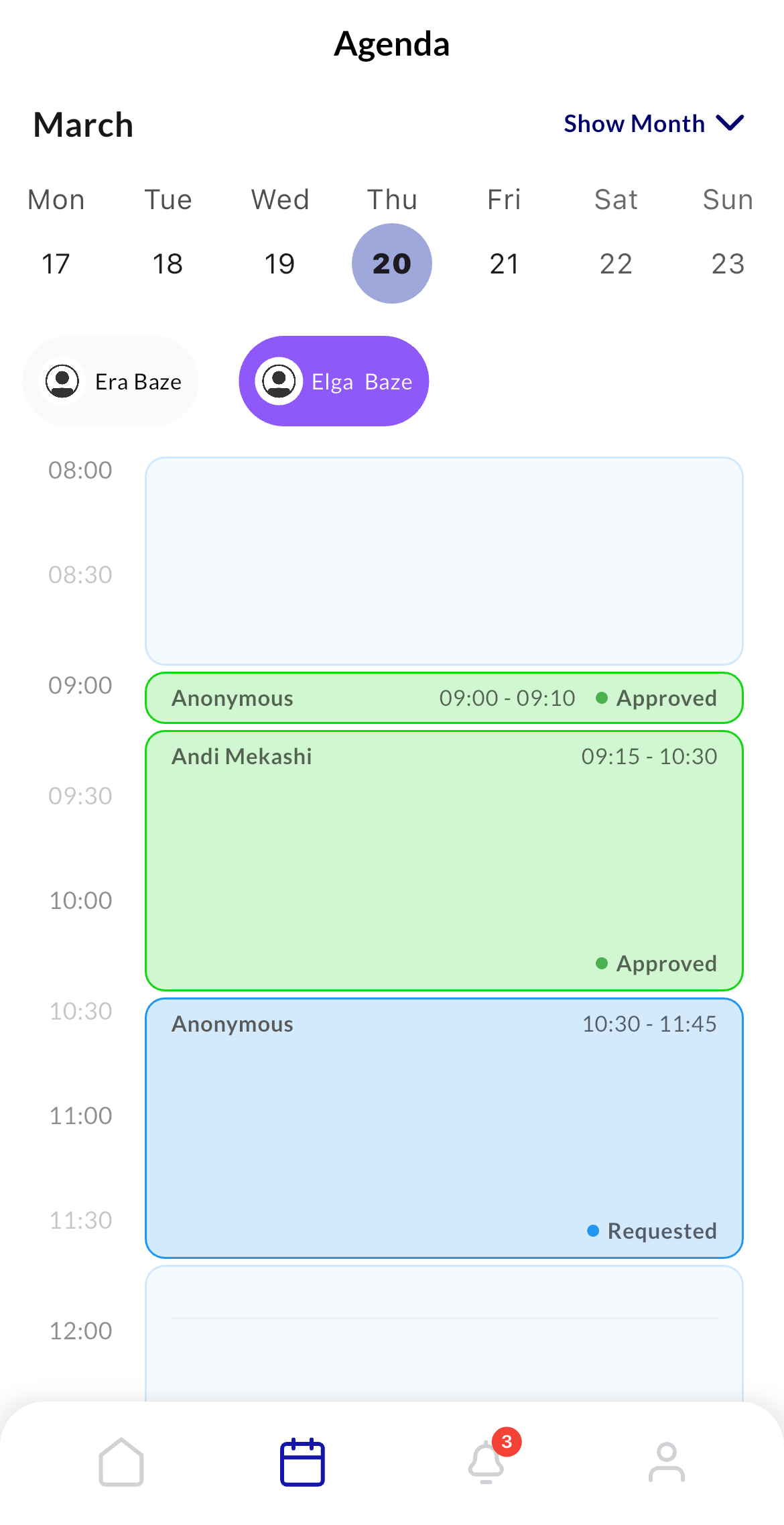
Business app — agenda calendar view
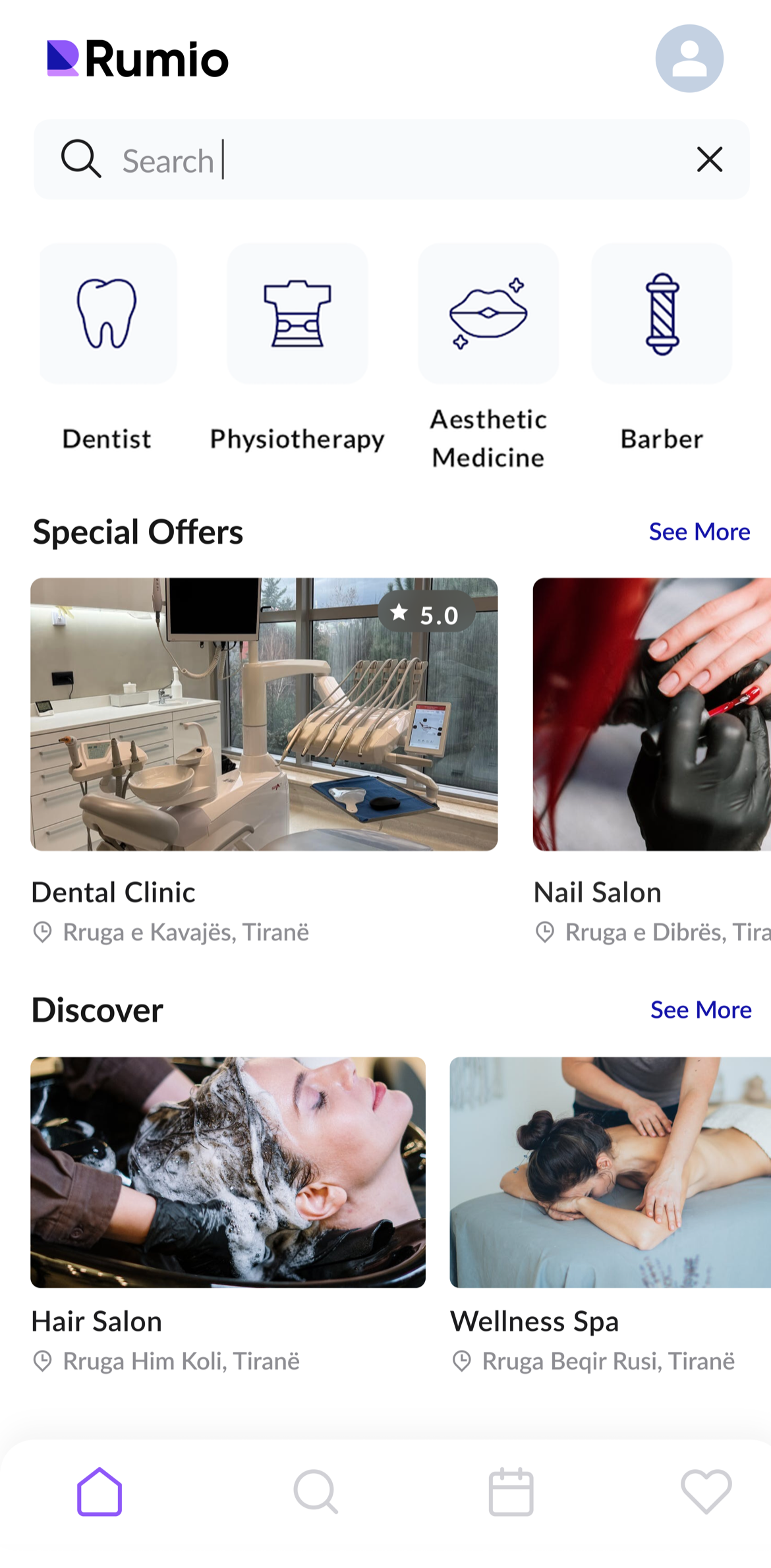
Customer app — discovery feed
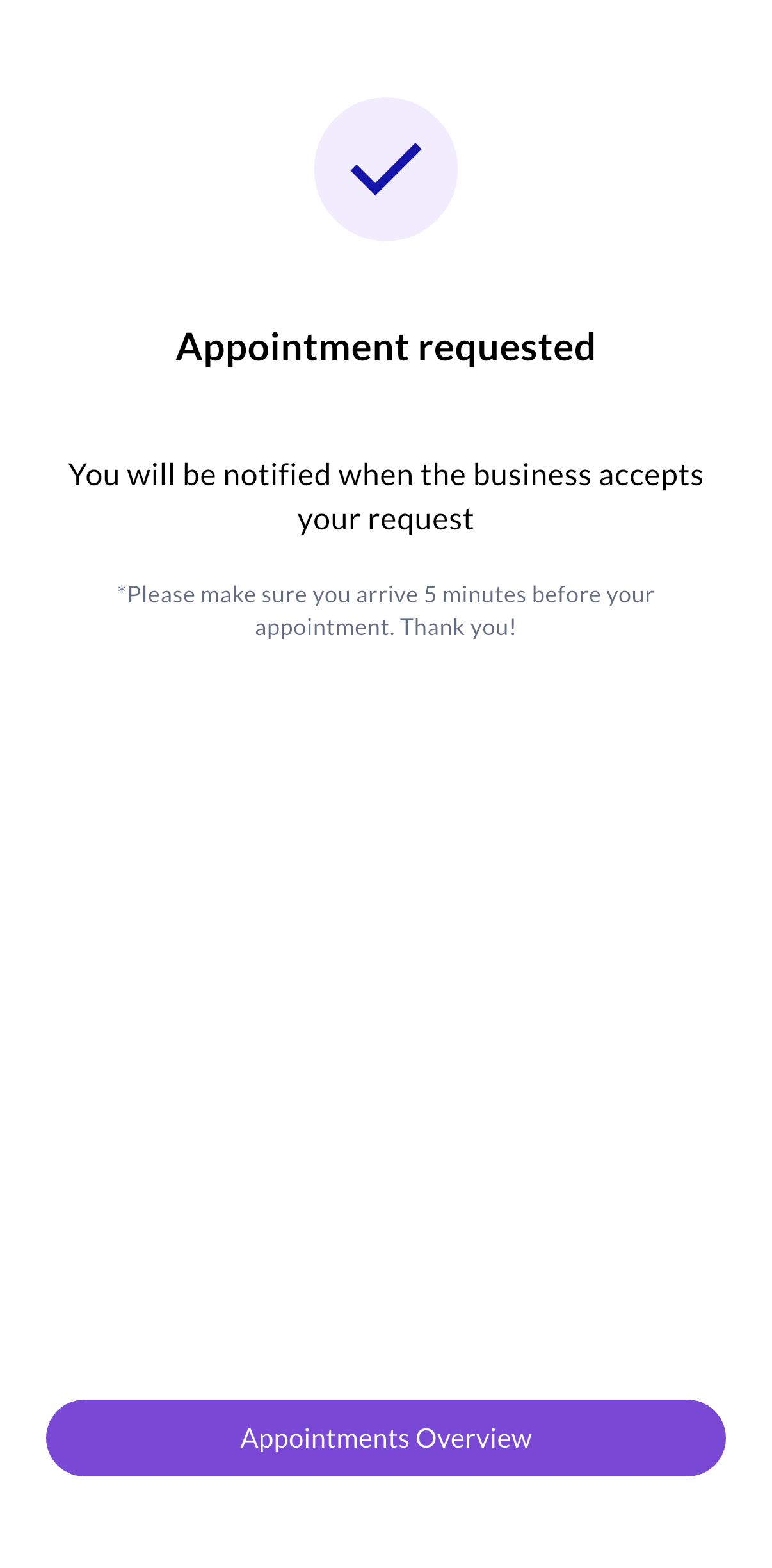
Booking confirmation screen

Onboarding was in person, by design. The businesses we were selling to had never used a SaaS tool. Remote onboarding would have failed. The CAC numbers people quote for SaaS don't apply to a segment that needs someone to sit next to them and demo the app on their own phone. Sales-led onboarding was a choice, not a temporary workaround — and it was the reason we had a dedicated sales manager on a small team.

Retention was a reminder system. The 22% lift in return bookings came almost entirely from a single mechanic: personalised reminders delivered through WhatsApp and push notifications, timed to land at the right moment relative to each customer's booking cadence. Clients who were reminded punctually arrived on time — which meant fewer appointments running over, less overlap between consecutive bookings, and a more predictable daily schedule for the salon. The retention number is the headline; the quieter effect was that the working day got easier to run.

We met users where they already were. No app required for customers. Businesses embedded the link in their Instagram bio, their WhatsApp auto-reply, their Google Maps profile, their own website. We didn't try to pull users out of those surfaces — we sat inside them.


What actually shipped — and what I'm deliberately not claiming.

100+ Onboarded businesses
1,000+ Active end-users within ten months
40% Month-over-month user growth
+22% Return bookings after reminder rollout

Shipped & measurable

  • 100+ onboarded businesses within ten months of launch
  • 1,000+ active end-users acquired primarily through supplier-led channels
  • 40% month-over-month user growth during the acquisition push
  • 22% lift in return bookings after shipping the personalised reminder system — punctual reminders reduced late arrivals and overlap between consecutive appointments
  • iOS + Android live; beta cohort graduated to general availability

Deliberately not claimed

  • Not claiming product-market fit. Paid conversion from the free cohort hadn't played out by the end of my window. PMF in subscription SaaS is a paid-retention question, not an active-user question.
  • Not claiming sustainable unit economics. CAC and LTV were directionally encouraging but unproven at scale — the sales motion was in-person and ours, not yet a repeatable engine.
  • Not claiming causal attribution on 40% MoM. Partnerships, paid ads, organic sharing, and supplier-referral all contributed. The number is real; the attribution isn't clean.
  • Not claiming regional expansion. Kosovo and North Macedonia were in the plan. They didn't execute inside my window, and I won't dress a plan as a result.

What I'd do differently. What changed my mind. What transfers.

i.

I would have charged sooner. A nominal fee — even €5/month — would have surfaced a real willingness-to-pay signal in month three instead of month seven. "Free for six months" solved the adoption problem and introduced a different one. Next time: charge something from week one, even if it's symbolic.

ii.

The no-download decision mattered more than I expected. Going in, I treated it as a nice-to-have that would help consumer conversion. By month three it had become the single most-cited reason businesses said yes — ahead of pricing, ahead of features, ahead of localisation. The lesson: your single non-negotiable constraint is worth more than five "nice to haves," and you should let it drive architecture all the way down.

iii.

I underestimated how physical the sales motion had to be. The team shape we eventually landed on — engineering plus one sales manager doing field work in-language — was the right one. I arrived at it later than I should have, because I was modelling SaaS conversion rates from segments that looked nothing like ours.

iv.

What transfers. Staging a two-sided marketplace so that supply density precedes consumer discovery. Writing scope ruthlessly when engineering is the binding constraint. Reading retention and acquisition as separate health metrics — a 40% MoM headline can hide a leaky retention curve, and vice versa. Picking one non-negotiable constraint and letting it shape the whole stack.


Available now on iOS and Android.

Two separate apps — one for service businesses managing their calendar, one for end-users discovering and booking. Both live in production.

For businesses

For customers